

There is a strange new obsession taking over the internet: Qazi Touqeer. The singer, who first became a household name after winning Fame Gurukul in 2005, has returned to reality television more than two decades later as a contestant on Bigg Boss 20. And somehow, a generation that was barely old enough to remember his …
Why Gen Z Is So Hellbent on Qazi Touqeer?
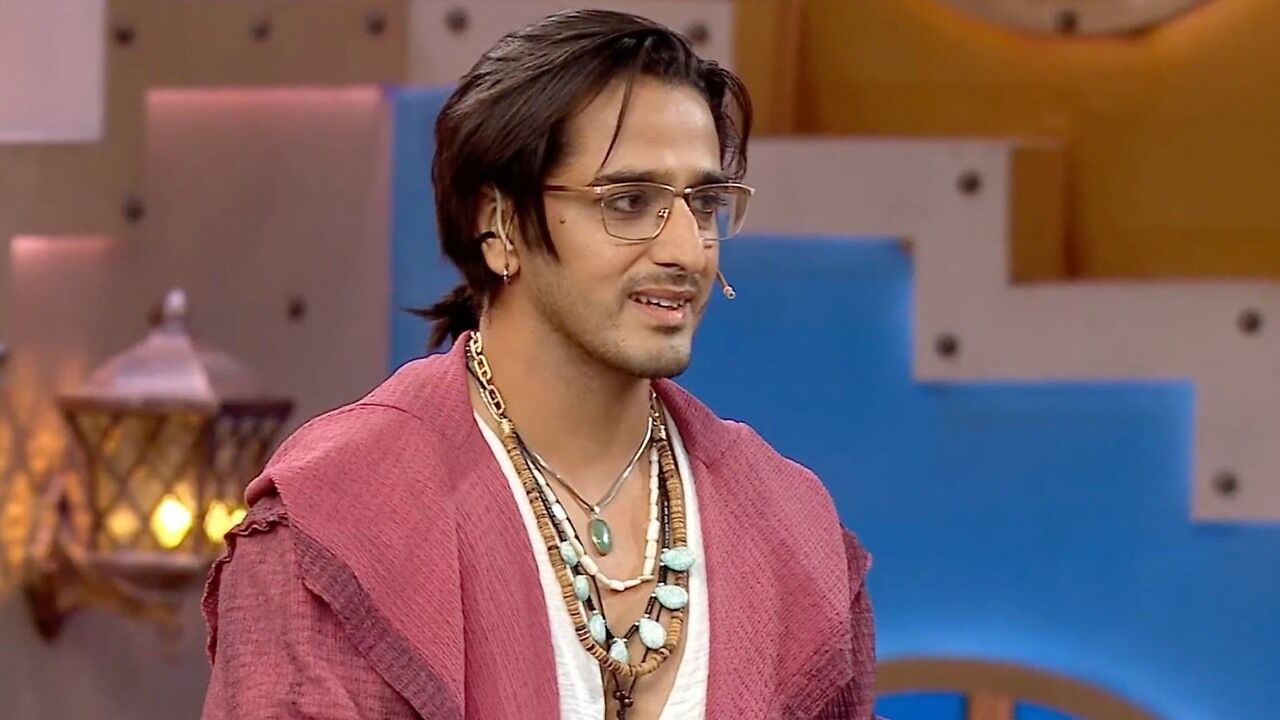
There is a strange new obsession taking over the internet: Qazi Touqeer. The singer, who first became a household name after winning Fame Gurukul in 2005, has returned to reality television more than two decades later as a contestant on Bigg Boss 20. And somehow, a generation that was barely old enough to remember his first television appearance is now making reels, edits and fan posts about him as if he never left.
The phenomenon is difficult to miss. Social media feeds are filling up with Qazi-centric edits, reaction videos and jokes. Former Bigg Boss contestant Gauahar Khan recently called the trend “Qazi fever” and said she was enjoying the reels in which viewers repeatedly choose Qazi as their favourite contestant.
But what exactly has made Qazi so watchable for younger audiences?
The answer is not just nostalgia. For Gen Z viewers, Qazi is almost the opposite of the polished, carefully managed celebrity they are used to seeing online. He is dramatic, unpredictable, slightly chaotic and completely comfortable being himself. In an internet culture where celebrities are increasingly conscious of how every expression, sentence and photograph will be received, Qazi often seems to operate without that filter.
And that may be precisely the point.
The man who came back from another television era
Qazi’s story begins in the mid-2000s. He rose to fame through Fame Gurukul, the 2005 singing reality show that also featured a young Arijit Singh. Qazi eventually won the competition alongside Ruprekha Banerjee, becoming one of the most recognisable faces of Indian reality television at the time. He was repeatedly placed in the danger zone during the competition, but viewers kept voting him back.
Then the spotlight moved elsewhere. That is what makes his current return particularly interesting. Qazi is not a new celebrity being introduced to Gen Z. He is an old reality TV personality being discovered almost as if he were new. For younger viewers, there is no childhood memory attached to him. There is no expectation of who Qazi is supposed to be. They are meeting him as an eccentric 41year old contestant walking into a house full of younger celebrities and immediately behaving like he owns the room.
That gives his comeback an unusual advantage: Gen Z gets to discover Qazi without the baggage of his original fame.
He is entertaining without trying too hard to be cool
A major part of Qazi’s appeal lies in his refusal to behave like a conventional internet celebrity. He does not appear obsessed with looking sophisticated, mysterious or effortlessly cool. He sings. He reacts dramatically. He jokes. He gets into arguments. He changes moods. He performs different personalities. Sometimes he simply says something so bizarre that social media does the rest. One of the clearest examples came when Qazi attempted to explain Gen Z dating terms such as “situationship” and “benching” to fellow contestant Mary Kom.
His explanation of “situationship” involved people going on a ship, creating a situation and then getting stuck in the middle of the ocean. His definition of “benching” was even more absurd. The clip quickly circulated online, with viewers laughing at his confidence rather than the accuracy of his definitions.
The important thing is that Qazi did not seem embarrassed by his misunderstanding. That is rare internet currency.
Gen Z loves the confidence of being completely wrong
There is something deeply memeable about a person confidently explaining something incorrectly. The internet has turned awkwardness, failed attempts and accidental comedy into entertainment. Qazi fits naturally into that culture because his funniest moments do not necessarily come from carefully constructed punchlines. They come from his absolute confidence in whatever he is saying.
Several viewers even compared the moment to Praful from Khichdi, the beloved character famous for confidently giving hilariously incorrect meanings of English words.
That comparison says a lot about the kind of humour Qazi is accidentally creating.
Gen Z has grown up in an environment where almost everything can become content. A photograph can become a meme. A two second facial expression can become a reaction GIF. A random sentence from a reality show can become an audio trend. This has also created a particular kind of celebrity culture. People who appear too conscious of becoming viral can sometimes feel less authentic.
Qazi works differently.
His expressions are exaggerated. His reactions are dramatic. His stories are often larger than life. Even when he is simply sitting around and talking, there is a sense that something unpredictable could happen. That makes him extremely easy to edit. One facial expression becomes a reaction meme. One sentence becomes an Instagram audio. One dramatic moment becomes a fan edit.
In other words, Qazi is almost perfectly designed for short form internet culture without actually behaving like an internet creator.
The nostalgia is coming from Gen Z’s older siblings too
There is another layer to the phenomenon. Although many Gen Z viewers may not have watched Fame Gurukul when it originally aired, they grew up in the cultural afterlife of 2000s Indian television. Reality shows from that period were part of the household television experience. Their contestants were not constantly available on social media. You saw them during an episode, read about them in newspapers or magazines, and then waited for their next appearance. Qazi belongs to that era. His return therefore feels like the unexpected resurrection of an old television character.
For some older viewers, he is nostalgia. For younger viewers, he is a discovery. That combination is powerful because both groups can participate in the same online conversation for completely different reasons.
He has a genuine “comeback” narrative
There is also something inherently satisfying about watching someone return after a long absence.
Qazi became famous at just 20 through Fame Gurukul. More than two decades later, he is once again competing in a reality show, but the circumstances are completely different.
He is no longer the young singer trying to prove himself.
He is now the experienced performer surrounded by contestants from a completely different generation.
His journey also includes an interesting connection to popular Bollywood culture. Qazi appeared in the “Afghan Jalebi” music video from Phantom, featuring Katrina Kaif. He has recalled that he was offered the opportunity shortly before the shoot after a fan’s Facebook post helped connect him to the production. He also said his appearance was not credited in the video’s description, although his fans continued to identify him in the comments.
That story adds another layer to the current fascination.
Qazi has already lived several versions of fame.
He has been a reality-show contestant, singer, performer, forgotten celebrity and now, unexpectedly, a viral reality-TV personality again.
Gen Z is not necessarily watching him because he is “cool”
This is perhaps the biggest misunderstanding surrounding the Qazi phenomenon.
His appeal does not necessarily come from being conventionally cool. In fact, it may come from the opposite.
Qazi can be loud when everyone else is trying to appear effortless. He can be dramatic when social media culture rewards restraint. He can be unapologetically silly when celebrities are usually expected to maintain a carefully constructed image.
That makes him refreshing. There is no elaborate “Qazi aesthetic” required to understand him.
You watch him and either laugh, get irritated, become curious, or wonder what he is going to do next. And that unpredictability is enough. He gives audiences something reality television was originally supposed to give them. Reality television was built around personality.
Before social media made celebrities accessible 24/7, reality shows offered audiences something different: the opportunity to watch people interact without a traditional scripted character separating the audience from the performer.
Over time, reality television became increasingly strategic. Contestants understood that every argument could become a clip. Every relationship could become a storyline. Every confession could become a headline. Qazi, however, often appears to operate from a much older reality-TV grammar. He is simply being theatrical. That does not mean everything he does is spontaneous or that viewers are seeing an untouched version of his personality. Reality television is, after all, heavily produced and edited.
There is an important distinction between being a fan of a celebrity and being obsessed with a celebrity as an internet character.
Even people who did not know him are now curious
Perhaps the most interesting part of the entire phenomenon is that many younger viewers entered Bigg Boss 20 without knowing who Qazi was. A recent report on his comeback described precisely this reaction: younger viewers initially wondered who he was, while audiences familiar with 2000s reality television immediately recognised him. Within days, however, the unfamiliar contestant had become one of the people viewers were talking about.
That is a remarkable transformation.
He went from “Who is this guy?” to someone whose name could dominate a reel’s comments section.
They need one recognisable personality.
Qazi has several.
So, is Gen Z really “hellbent” on Qazi?
Probably not every member of Gen Z, of course. But the online enthusiasm around him is difficult to ignore.
What makes Qazi different is not that he is the youngest, coolest or most polished contestant. It is that he is unpolished in exactly the right way for the internet. For a generation that has seen thousands of perfectly edited influencers, Qazi’s appeal may lie in something much simpler: He is entertaining without looking like he is trying to manufacture entertainment.
And perhaps that is why the internet has decided that, after 21 years, Qazi Touqeer is suddenly everyone’s guy.


